
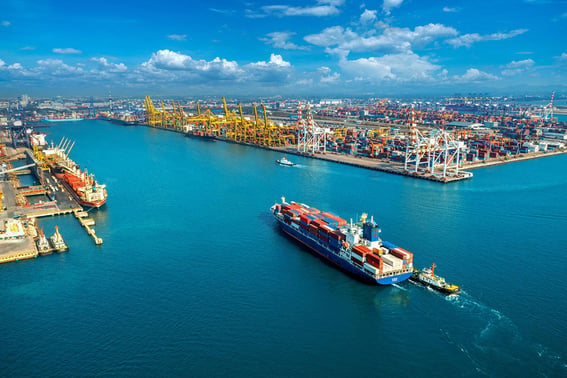
Brent crude hit $138 per barrel on April 7, 2026. As of mid-May, it has settled around $108 to $110 per barrel, roughly $44 to $46 higher than the same time last year. The cause: military conflict in the Middle East has effectively shut the Strait of Hormuz, the shipping chokepoint that carried nearly 20% of the world’s oil supply before the disruption began on February 28.
The U.S. Energy Information Administration (EIA) expects Brent to average around $106 per barrel through May and June, with prices potentially dropping to $89 per barrel by Q4 2026 as Middle East production slowly recovers. But “slowly” is the operating word. The EIA does not expect pre-conflict production and trade patterns to fully resume until late 2026 or early 2027.
For procurement teams and finance departments, the effects are already visible on invoices. Distributors and suppliers of office products, packaging, MRO materials, janitorial supplies, and industrial goods are passing through higher costs in the form of item price increases, delivery surcharges, higher minimum order thresholds, and reduced promotional pricing. If your organization purchases these categories on a recurring basis, the next few months will test your procurement agreements.
How oil prices turn into higher prices on the supplies you buy
When crude oil rises by $44 per barrel in under three months, the cost pressure reaches businesses through two channels. The first is transportation: it costs more for distributors to receive, warehouse, and deliver products, and those costs get built into the prices you pay. The second is production: petroleum is a raw material in thousands of commercial products, from plastic containers and packaging to cleaning chemicals and industrial lubricants. When both channels spike at the same time, the price increases come faster than most procurement teams expect.
The WTO projects global merchandise trade growth slowing from 4.6% in 2025 to 1.9% in 2026. If crude oil and LNG prices remain elevated throughout the year, that figure could drop further to 1.4%. Meanwhile, the UAE’s departure from OPEC, effective May 1, 2026, has reduced the cartel’s spare production capacity from an estimated 3.8 million barrels per day to 2.5 million, leaving less room to offset supply disruptions.
For businesses that rely on regular deliveries of supplies from distributors, these shifts mean higher per-order costs, longer lead times, and fewer opportunities for competitive pricing from vendors.
Your distributors are already raising prices
The price increases are not theoretical. Distributors across office supplies, janitorial products, packaging, and industrial materials are already adjusting their pricing models in response to higher fuel and raw material costs.
ODP Business Solutions (the B2B arm of Office Depot) reserves the right to impose margin-based pricing to maintain minimum profitability thresholds and can change customer pricing at any time without notice, citing market conditions and industry constraints. That language has always been in their terms, but it becomes operative when costs rise this sharply. Amazon, which many businesses use for ad hoc supply purchases, has already added a 3.5% fuel and logistics surcharge on all orders fulfilled through its network, effective April 17. The company cited elevated transportation costs that it could no longer absorb.
These are just two examples. Across the board, supply distributors are responding to higher costs in several ways:
- Item price increases on petroleum-dependent products like plastics, cleaning chemicals, and packaging materials
- Delivery surcharges and fuel fees added to orders that previously shipped at no extra cost
- Higher minimum order thresholds to qualify for free or reduced-cost delivery
- Reduced promotional pricing and volume discounts as distributors protect their own margins
- Longer lead times as carrier constraints slow down the distribution networks that suppliers depend on
For organizations placing recurring operational orders, these increases do not arrive as a single line item. They compound across delivery charges, minimum order thresholds, freight rate adjustments, and reduced promotional pricing from distributors. Individually, each increase looks small. Added together over a quarter, they can take a real bite out of your procurement budget.
Which supply categories are most exposed
Not every category is equally affected. The products most sensitive to oil-driven price increases are those that depend on petroleum as a raw material, require heavy or bulky shipping, or both. The categories that overlap most with typical indirect procurement spend include:
- Packaging materials and corrugated containers
- Plastics, bottles, and molded components
- Cleaning chemicals and janitorial products
- Industrial lubricants and maintenance fluids
- Safety products and PPE with synthetic material components
- Office supplies sourced from petroleum-based manufacturing processes
The ripple effects can be severe even in distant supply chains. Fertilizer prices in parts of Asia rose 100% to 150% within weeks of the Strait of Hormuz closure, forcing some producers to halt orders entirely. While most North American procurement teams are not buying fertilizer, the pattern is the same: when petroleum-based input costs spike, suppliers and distributors protect their margins first.
Procurement teams already managing tight budgets and inflation pressure now face a second front. And unlike broad inflation, which tends to be gradual, oil-driven price increases hit specific categories hard and fast.
What your procurement team should be doing right now
The organizations that handle these cost spikes best are the ones that took action before the next round of increases hit their invoices. If you have not already reviewed your procurement exposure to distributor price changes, start here:
- Audit your recent invoices. Pull purchase orders from the last six months and compare unit prices, delivery fees, and any new surcharges. Look for increases that were not flagged or negotiated.
- Check your distributor contracts for pricing protections. Review agreements with your office supply, MRO, janitorial, and packaging distributors for price adjustment clauses, surcharge pass-through language, and pricing caps. If your contracts do not include adjustment limits, you are exposed to whatever rate increases your distributors choose to pass along.
- Consolidate orders where possible. Shifting from small, frequent purchases to larger, less frequent orders may help you qualify for better pricing tiers or avoid newly imposed minimum order surcharges.
- Identify your most vulnerable categories. Focus on packaging, MRO supplies, janitorial products, and anything petroleum-based. These are the categories where price increases from distributors will be sharpest.
- Evaluate your distributor relationships. Some distributors have better cost structures, longer price-lock windows, or delivery networks that are less affected by the current disruptions. This is a good time to compare what you are paying against what the market offers.
The EIA forecasts oil prices easing by late 2026, but forecasts have been wrong before. No one knows how long the current disruptions will last, and waiting for a clearer picture means absorbing the cost increases in the meantime.
How a group purchasing organization can protect your supply pricing
One of the advantages of working through a group purchasing organization (GPO) during periods of cost volatility is access to distributor and supplier agreements that were negotiated at scale. CenterPoint Group, a GPO with over $1 billion in collective member spend, maintains negotiated pricing programs with distributors across indirect spend categories including MRO and industrial supplies, office supplies, packaging, safety and PPE, and janitorial products.
During this period of rising costs, CenterPoint members benefit from several specific protections:
- Negotiated pricing that holds. CenterPoint’s agreements with distributors include price lock programs and multi-year pricing structures that limit exposure to temporary market spikes. While other buyers absorb whatever rate increase a distributor passes through, members benefit from pricing that was negotiated before the current volatility began.
- Free delivery programs still in effect. Several of CenterPoint’s distributor programs continue to include free delivery for qualified members, even as many distributors across the market add delivery fees and surcharges to routine orders. For organizations placing frequent operational purchases, this eliminates one of the fastest-growing cost increases in the current environment.
- Pre-negotiated distributor relationships. Members do not need to renegotiate contracts distributor by distributor as costs rise. The pricing protections are already in place across the categories where oil-driven increases are hitting hardest.
The current oil price environment is a reminder that procurement cost control is not just about negotiating a lower unit price on any single order. It is about building a purchasing structure that absorbs market shocks without sending your team into reactive, order-by-order cost management. Organizations that put those structures in place before the next disruption are the ones that come through it with their budgets intact.
Leave a Reply
Comment policy: We love comments and appreciate the time that readers spend to share ideas and give feedback. However, all comments are manually moderated and those deemed to be spam or solely promotional will be deleted.