

Standard Shipping is one of the most commonly used delivery methods in eCommerce, retail, and B2B logistics. Despite its widespread use, many businesses and consumers don’t fully understand what standard shipping entails, how it compares to other shipping options, or whether it’s the right choice for their needs.
In this article, we’ll break down what standard shipping is, explore its pros and cons, and explain how companies can leverage it for lower shipping costs and better operational efficiency.
What Is Standard Shipping?
Standard Shipping refers to a non-expedited delivery option offered by carriers such as UPS, FedEx, USPS, and regional couriers. It is typically the most economical shipping choice and balances cost with reasonable delivery times.
While delivery windows vary by carrier and destination, standard shipping usually takes 3 to 7 business days for domestic shipments. Unlike overnight or express services, standard shipping does not prioritize speed, which is why it often comes with lower shipping costs.
From a carrier perspective, standard shipping allows shipments to move through optimized, cost-efficient transportation networks rather than premium air routes or dedicated express lanes.
How Standard Shipping Works
Understanding how standard shipping fits into the broader shipping process can help businesses better manage expectations and costs.
1. Order Processing
Once an order is placed, it is picked, packed, and labeled at a warehouse or fulfillment center.
2. Carrier Pickup
The package is collected by the carrier during scheduled pickup windows, often grouped with other standard shipments.
3. Transportation Network
Standard shipping packages move through ground-based networks or economy air services, depending on distance and carrier policies.
4. Final Delivery
After sorting at regional hubs, the shipment is delivered to the end customer within the promised delivery window.
This slower, more consolidated approach is what enables savings on shipping compared to expedited options.
Standard Shipping vs. Expedited Shipping
To fully understand the value of standard shipping, it helps to compare it to faster alternatives.
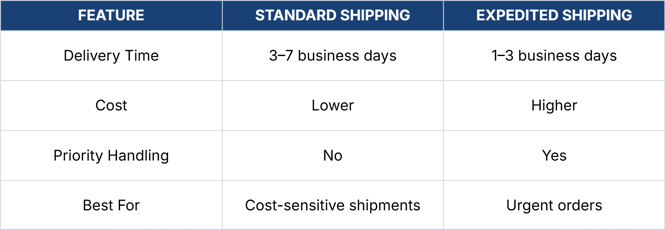
For many businesses, especially those shipping non-urgent goods, standard shipping provides the best balance between cost and reliability.
Pros of Standard Shipping
1. Lower Shipping Costs
One of the biggest advantages of standard shipping is affordability. Because it doesn’t require premium handling or time-sensitive routing, it typically offers lower shipping costs than express or overnight services.
For businesses shipping at scale, even small reductions in per-package cost can result in significant savings on shipping over time.
2. Predictable and Reliable Delivery
While not the fastest option, standard shipping is generally reliable. Major carriers like UPS and FedEx have highly optimized ground networks that deliver consistent performance.
Businesses that clearly communicate delivery expectations can maintain high customer satisfaction without paying premium carrier rates.
3. Ideal for Non-Urgent Shipments
Standard shipping works well for:- Everyday eCommerce orders
- Subscription products
- B2B replenishment shipments
- Bulk or heavy items
When speed is not the primary concern, standard shipping is often the most practical option.
4. Easier to Optimize at Scale
Standard shipping is easier to optimize through volume consolidation, carrier negotiations, and network analysis. This makes it ideal for companies focused on shipping process optimization rather than speed alone.
5. Access to Carrier Discounts
Standard shipping lanes often qualify for:- Contract-based shipping discounts
- Volume-based incentives
- Zone-skipping opportunities
These benefits are harder to achieve with expedited services due to their higher base pricing.
Cons of Standard Shipping
1. Slower Delivery Times
The most obvious drawback of standard shipping is speed. In an era where same-day and next-day delivery are increasingly common, longer delivery times may feel outdated to some customers.
This can be a disadvantage for businesses competing primarily on convenience.
2. Not Suitable for Time-Sensitive Shipments
Standard shipping is not ideal for:- Perishable goods
- Medical or urgent supplies
- High-value items with strict delivery windows
In these cases, faster shipping methods may be necessary despite higher costs.
3. Less Control Over Transit Time
Because standard shipping prioritizes efficiency over speed, delivery times may vary based on distance, weather, or carrier capacity.
This lack of precision can complicate planning for highly time-sensitive operations.
4. Competitive Pressure from Fast Shipping Expectations
Major retailers have trained consumers to expect rapid delivery. Businesses relying exclusively on standard shipping may need to manage customer expectations carefully through transparent communication and order tracking.
How Standard Shipping Impacts Shipping Costs
Shipping costs are influenced by several factors, including:- Package weight and dimensions
- Shipping zones
- Carrier pricing structures
- Fuel surcharges
- Service level selected
- Air transportation usage
- Priority handling fees
- Specialized delivery services
When combined with smart packaging and carrier selection, standard shipping becomes a powerful tool for controlling logistics expenses.
FedEx Rates and Standard Shipping
FedEx offers multiple ground and economy shipping options that fall under standard shipping. FedEx rates for these services are typically lower than their Express offerings, especially for domestic shipments.
However, FedEx pricing can vary significantly based on:- Contract terms
- Shipment volume
- Zones and fuel surcharges
This is why many businesses seek expert analysis to ensure they are truly getting competitive FedEx rates.
UPS Rates and Standard Shipping
UPS Ground is one of the most popular standard shipping services in North America. UPS rates for ground shipping are generally predictable and well-suited for businesses shipping consistently.
That said, UPS pricing structures can be complex, with accessorial fees that quietly increase total shipping costs if not managed properly.
The Role of Shipping Process Optimization
Standard shipping becomes even more effective when paired with shipping process optimization. This includes:- Right-sizing packaging to avoid dimensional weight charges
- Selecting optimal carriers by zone
- Consolidating shipments
- Auditing invoices for billing errors
- Negotiating better contract terms
Optimized shipping processes allow businesses to reduce costs without sacrificing service quality.
Standard Shipping for eCommerce Businesses
For eCommerce companies, standard shipping remains the backbone of fulfillment strategies.
Many successful brands use a hybrid approach:- Standard shipping as the default option
- Expedited shipping as a paid upgrade
This model protects margins while still offering flexibility to customers who want faster delivery.
How CenterPoint Group Helps Lower Shipping Costs
Managing shipping costs has become increasingly complex as carrier pricing structures evolve. This is where CenterPoint Group provides value. Rather than acting as a carrier, CenterPoint Group specializes in shipping consulting, helping businesses analyze and improve their logistics strategies.
What CenterPoint Group Does
CenterPoint Group works with companies to:- Review current shipping data and invoices
- Benchmark FedEx rates and UPS rates against market standards
- Identify hidden fees and inefficiencies
- Uncover opportunities for shipping discounts
- Implement long-term shipping process optimization strategies
The goal isn’t to push a specific carrier, but to help businesses make informed decisions that lead to sustainable savings on shipping.
A Data-Driven, Carrier-Neutral Approach
Because CenterPoint Group is carrier-neutral, recommendations are based on data—not incentives. This allows businesses to confidently choose standard shipping where it makes sense and upgrade only when necessary.
For companies shipping at scale, this approach often results in meaningful cost reductions without disrupting daily operations.
Is Standard Shipping Right for Your Business?
Standard shipping is an excellent choice if:- Your customers value cost over speed
- Your products are not time-sensitive
- You ship consistently and at volume
- You want predictable delivery performance
However, it should be part of a broader shipping strategy rather than a one-size-fits-all solution.
Leave a Reply
Comment policy: We love comments and appreciate the time that readers spend to share ideas and give feedback. However, all comments are manually moderated and those deemed to be spam or solely promotional will be deleted.